Golf, Florida · 33436
Estate Landscaping in the Village of Golf
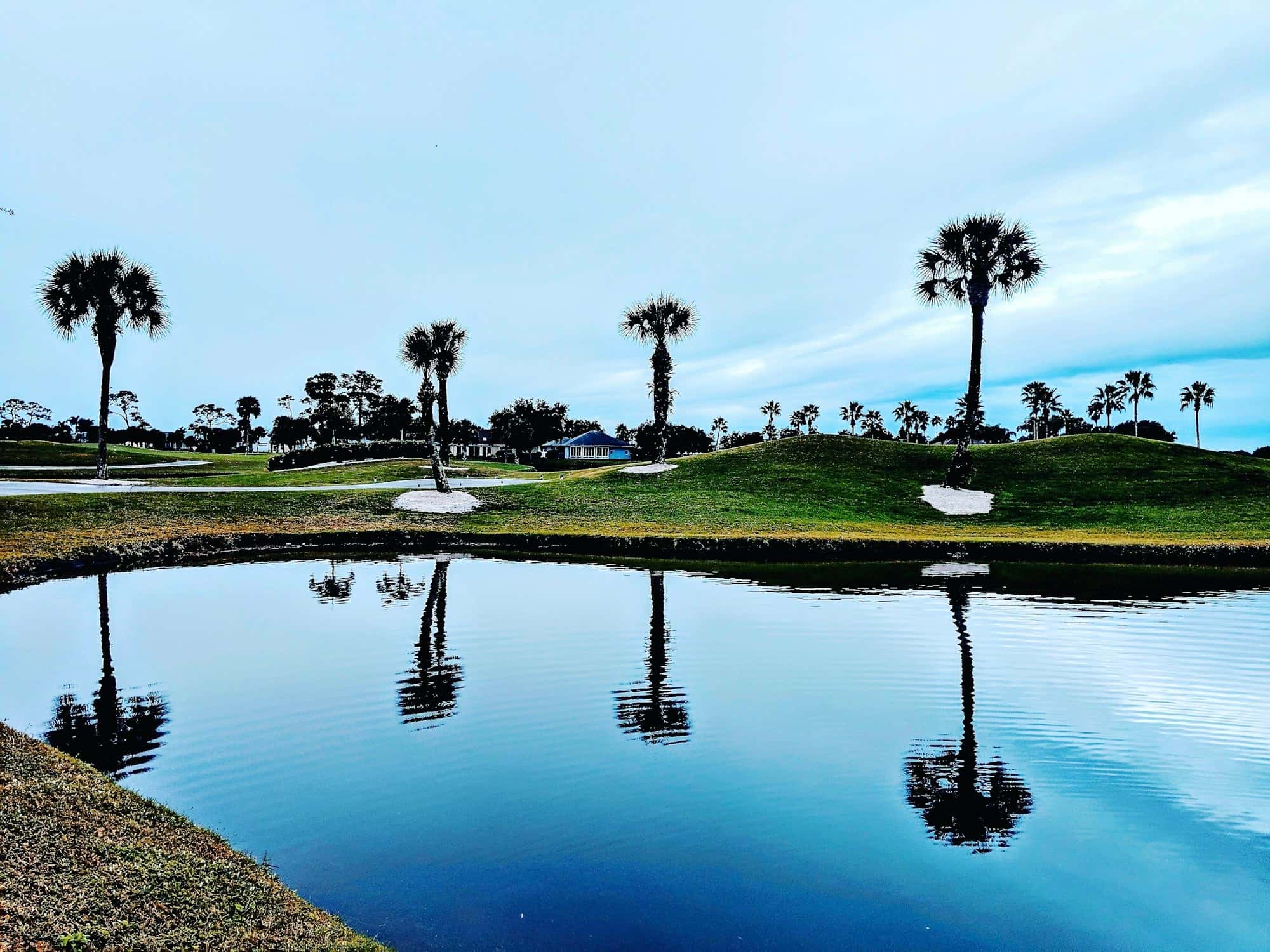
A small inland village wrapped around a private course, where lawns, hedges and palms are read against the fairway beside them.
Request a Property AssessmentThe Village of Golf is one of the smallest municipalities in Palm Beach County: about 542 acres between Congress Avenue and Military Trail near Boynton Beach, with 255 residents at the 2020 census. It exists because of the Country Club of Florida, which opened in 1956 on a former dairy farm set on one of the higher ridges in the county, and the village incorporated the following year. Nearly every property here is defined by its relationship to that course.
That relationship sets the standard for the grounds. A lawn that borders a maintained fairway is judged by comparison, so thin turf, an uneven hedge line or a yellowing palm reads immediately. Partner crews assigned here plan around continuity: turf that matches its surroundings in color and density, hedges kept at a consistent face, and palm nutrition handled on a calendar rather than after symptoms appear. The goal is a property that looks settled into the landscape the village was built on.
The properties
With 255 residents spread across roughly 0.83 square miles, the village is quiet and open, and it is organized around the golf course rather than a downtown. Early plans called for 148 homes. For a typical residence this means generous lawn area, long sightlines toward the course and perimeter plantings that do the work of screening. Programs here lean on turf health, hedge discipline and canopy care, because those are the elements that face the fairway and the neighbors at once.
On the ground
What landscapes in Golf contend with
Chinch bugs in St. Augustine lawns
Southern chinch bug is the most damaging insect pest of St. Augustinegrass, and in South Florida severe damage tends to run from March through November. The insects feed in the thatch, so injury appears as yellowing patches that turn reddish and spread outward. Programs here scout the edges of sunny, drought-stressed areas first, confirm the insect before treating, and manage thatch and irrigation so the lawn is less hospitable in the first place.
Ficus whitefly in privacy hedges
Where older properties still rely on ficus for screening, the ficus whitefly can defoliate a hedge that took years to grow. Nymphs feed on leaf undersides, leaves yellow and drop, and heavy infestations cause branch dieback. Crews check by brushing the foliage and watching for clouds of tiny white adults. Early detection matters because populations need several generations to reach damaging levels, which gives an attentive program time to act.
Potassium deficiency in royal palms
UF/IFAS identifies potassium deficiency as the leading cause of royal palm death in southern Florida landscapes. Symptoms appear first on the oldest fronds as tip and marginal necrosis. The instinct to trim those fronds away makes things worse: regular removal of discolored older leaves has been shown to speed decline. A sound program feeds with a palm maintenance fertilizer on a quarterly rhythm and leaves the older fronds in place.
Ganoderma in mature palms
Ganoderma butt rot, caused by Ganoderma zonatum, decays the lower four to five feet of a palm trunk, and every palm species is a potential host. There is no cultural or chemical cure, and many palms show no conk until late. Crews note any shelf-like growth at the base and recommend prompt removal once conks appear, which limits spore spread to neighboring palms in a planting.
Services in Golf
- Estate Landscape MaintenanceMaintenance for Golf properties
- Landscape Design & InstallationDesign for Golf properties
- IrrigationIrrigation for Golf properties
- Tree & Palm CareTrees & Palms for Golf properties
- Outdoor LightingLighting for Golf properties
- Sod, Hedges & Privacy ScreeningSod & Hedges for Golf properties
- Seasonal ColorSeasonal Color for Golf properties
- HOA & Property ManagementHOA for Golf properties
Landscaping in Golf: questions
Is the Village of Golf its own municipality?
Yes. It was incorporated on May 30, 1957, the year after the Country Club of Florida opened, partly to avoid annexation by Delray Beach and Boynton Beach. It is surrounded by Boynton Beach on the east and south. Requests for work here are matched with partners who understand that permits and code questions go to the village, not to a neighboring city.
Why do the old fronds on my royal palm look scorched at the tips?
Tip and marginal necrosis on the oldest fronds is the typical sign of potassium deficiency in royal palms, which UF/IFAS calls the leading cause of their death in southern Florida. Cutting those fronds off tends to accelerate decline. A partner crew will usually recommend a palm maintenance fertilizer on a quarterly schedule and patience while new fronds emerge clean.
How are partner companies chosen for a property here?
Each request begins with a property assessment. The network then connects the owner with an independent partner landscape company whose scope fits the property. Partners are vetted for licensing and insurance before they receive requests, and the owner contracts directly with the partner for the work.
Nearby estate towns
Sources for this page
- Village of Golf is 542 acres between Congress Avenue and Military Trail near Boynton Beach, centered on the Country Club of Florida: education.pbchistory.org
- Club opened in 1956 on a former dairy farm on one of the county's highest ridges; first of 148 homes; village incorporated in 1957 to avoid annexation by Delray Beach and Boynton Beach: education.pbchistory.org
- Incorporated May 30, 1957; 0.83 sq mi; 2020 population 255; enveloped by Boynton Beach to east and south: en.wikipedia.org
- ZIP 33436 used for Country Club Circle addresses in the village: www.brickellsold.com
- Southern chinch bug is the most damaging St. Augustinegrass pest; severe damage March through November in South Florida; feeds in thatch: ask.ifas.ufl.edu
- Ficus whitefly defoliates ficus hedges; check by disturbing foliage; early detection: blogs.ifas.ufl.edu
- Potassium deficiency is the leading cause of royal palm mortality in southern Florida; removing older discolored leaves accelerates decline; quarterly 8-2-12+4Mg: edis.ifas.ufl.edu
- Ganoderma butt rot decays lower 4-5 ft of trunk, all palms are hosts, no cure, remove after conks appear: ask.ifas.ufl.edu
Property assessment
Request an assessment in Golf
- 01Tell us about the propertyTown, property type and what you'd like looked after. Two minutes.
- 02A partner walks the groundsTurf, beds, palms, irrigation and drainage, with you, your manager or staff.
- 03You receive a written programScope, visit schedule and price in writing, before any work begins.
Prefer to talk it through? (561) 319-1104