Juno Beach, Florida · 33408
Coastal Landscaping in Juno Beach
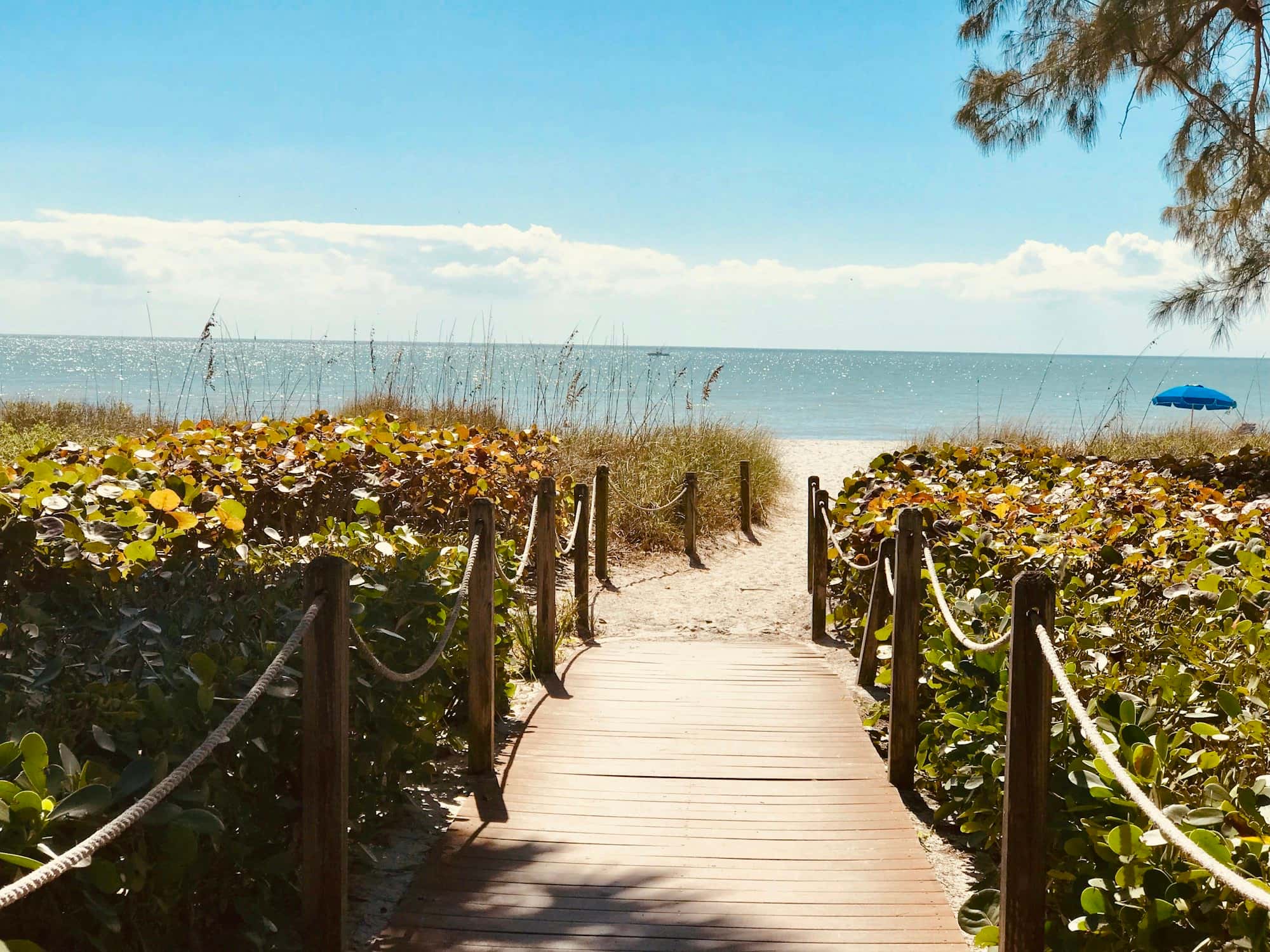
A small oceanfront town where nesting turtles hold the beach for eight months, and every plant and fixture near the dune is planned around them.
Request a Property AssessmentIn Juno Beach the sea sets the terms for much of the town. Loggerhead Marinelife Center, which also runs the Juno Beach Pier, describes the beach it monitors as one of the most densely nested sea turtle beaches in the world. That fact runs through landscape work here. Exterior light fixtures, glass facing the beach and dune plantings all answer to the nesting calendar before they answer to taste.
The town's code leans native as well. Landscape plans submitted to Juno Beach must use at least 50 percent native material in each plant category, trees, shrubs and groundcover alike, and must follow xeriscape principles. East of the Coastal Construction Control Line, Brazilian pepper, Australian pine and melaleuca have to be removed and replaced with native coastal vegetation. Partner crews working in Juno Beach plan around those requirements from the first site visit, so a refreshed planting looks finished and also clears review.
The properties
Housing splits between oceanfront and near-ocean condominium buildings and single-family homes, and the town's sea turtle protection zone can reach lots west of Ocean Drive. Condominium grounds are run by boards and turn on dune-side beds, entries, pool decks and exterior lighting that has to stay compliant. On a compact single-family lot each palm, hedge and fixture carries more weight in the design. UF/IFAS advises keeping palms with low salt tolerance a quarter mile or more from the seashore, which narrows the palm list for lots near the beach.
On the ground
What landscapes in Juno Beach contend with
Choosing palms for salt exposure
UF/IFAS sorts palms by salt tolerance. High-tolerance species can be grown in exposed sites near the seashore, moderate ones belong in protected sites near the ocean, and low-tolerance palms should not be planted within a quarter mile of the seashore. On an oceanfront lot in Juno Beach that guidance settles most palm decisions before style enters the conversation. A sound program places exposed specimens by tolerance and keeps tender material in the lee of buildings.
Sea oats and sea grape are dune, not hedge
Florida law makes it unlawful to cut, harvest, remove or eradicate sea oats or sea grapes on public land, or on private land without the owner's consent, because the plants bind beach sand. For condominium boards and oceanfront owners, the practical result is restraint. Partner crews treat sea oats and sea grape as part of the dune rather than as ornamental material, and trim only on the owner's explicit direction.
Chinch bugs in sunny St. Augustinegrass
Southern chinch bug is a serious pest of St. Augustinegrass, and UF/IFAS notes that some Florida populations have developed insecticide resistance and adapted to the once-resistant Floratam cultivar. Its guidance is to mow St. Augustinegrass at 3 to 4 inches, avoid heavy inorganic nitrogen and keep thatch down. A program confirms live bugs at the margin of yellowing patches before anything is applied.
Whitefly honeydew on decks and pools
Rugose spiraling whitefly, first reported in Florida in 2009, feeds on palms, gumbo limbo, black olive and many woody ornamentals. UF/IFAS describes honeydew, white wax and sooty mold falling onto patios, cars and furniture, and into pools, where it can affect water chemistry and clog filters. Regular monitoring, careful pressure washing early on and systemic treatments only when needed keep it in check around pool decks and terraces.
Local rules
What Juno Beach requires
Summaries for planning. The linked source is the authority; rules change.
Sea Turtle Lighting Permit
Section 34-1128 of the town code adopts Palm Beach County's sea turtle rules by reference. A Sea Turtle Lighting Permit is required within the Sea Turtle Protection Zone, which covers all properties within 600 feet landward of the mean high-water line and can include lots west of Ocean Drive. New exterior lighting, replaced or modified fixtures and new windows with a line of sight to the beach all trigger it, so landscape lighting goes through review.
SourceFertilizer blackout, June 1 to September 30
Juno Beach prohibits fertilizer containing nitrogen or phosphorus on turf and landscape plants between June 1 and September 30, during any flood, tropical storm or hurricane watch or warning, and on saturated soil. The same nutrients are barred before seeding or sodding and for the first 30 days afterward. A compliant program finishes summer feeding in May and resumes in October.
SourceNative planting and invasive removal
Landscape plans in every Juno Beach zoning district must be at least 50 percent native in each plant type and use xeriscape principles, and changing 30 percent or more of the trees and shrubs on an approved plan requires a new plan. East of the Coastal Construction Control Line, Brazilian pepper, Australian pine and melaleuca must be removed and replaced with native coastal vegetation.
Source
Services in Juno Beach
- Estate Landscape MaintenanceMaintenance for Juno Beach properties
- Landscape Design & InstallationDesign for Juno Beach properties
- IrrigationIrrigation for Juno Beach properties
- Tree & Palm CareTrees & Palms for Juno Beach properties
- Outdoor LightingLighting for Juno Beach properties
- Sod, Hedges & Privacy ScreeningSod & Hedges for Juno Beach properties
- Seasonal ColorSeasonal Color for Juno Beach properties
- HOA & Property ManagementHOA for Juno Beach properties
Landscaping in Juno Beach: questions
Do I need a permit to change landscape lighting in Juno Beach?
Inside the Sea Turtle Protection Zone, yes. The town requires a Sea Turtle Lighting Permit to install new exterior lighting or to replace or modify existing fixtures, and new installations also need a town building permit. The zone covers properties within 600 feet landward of the mean high-water line. FWC guidance favors fixtures mounted low, fully shielded and using long-wavelength amber or red light above 560 nanometers.
Can the sea grape blocking our ocean view be cut back?
Only with care and the owner's consent. Florida law prohibits cutting, harvesting or removing sea oats or sea grapes from public land, or from private land without the owner's consent, because the plants hold beach sand in place. On a condominium property the board's written direction matters. Partner crews recommend modest trimming over removal and treat dune vegetation as structural.
How native does a new planting have to be?
Juno Beach requires landscape plans to use at least 50 percent native material in each category of trees, shrubs and groundcover, prioritizes native plantings and requires xeriscape principles. Replacing 30 percent or more of the trees and shrubs on an approved plan triggers a new plan submission to planning and zoning, so a larger refresh should start with the approved plan in hand.
When can a Juno Beach lawn be fertilized?
Products containing nitrogen or phosphorus cannot go down between June 1 and September 30, or during a flood, tropical storm or hurricane watch or warning, and never on saturated soil. Newly seeded or sodded areas also wait 30 days. In practice, feeding for turf and beds is scheduled into October through May.
Nearby estate towns
Sources for this page
- Juno Beach Section 34-1128 adopts PBC sea turtle rules; permit triggers; zone is 600 ft landward of mean high-water line and may include west side of Ocean Drive; new installations need a building permit: www.juno-beach.fl.us
- Loggerhead Marinelife Center describes its monitored beach as one of the most densely nested sea turtle beaches in the world: www.wptv.com
- Loggerhead Marinelife Center operates the Juno Beach Pier: marinelife.org
- Juno Beach landscape plans: at least 50 percent native per plant type, xeriscape principles, 30 percent change requires new plan: library.municode.com
- Invasive pest plants east of the CCCL must be removed and replaced with native coastal vegetation: library.municode.com
- Juno Beach fertilizer prohibited period: June 1 to September 30 and during flood, tropical storm or hurricane watches or warnings: library.municode.com
- Juno Beach: no N or P on saturated soils, before seeding or sodding, or for 30 days after: library.municode.com
- Palm salt tolerance categories; low-tolerance palms not within a quarter mile of the seashore: ask.ifas.ufl.edu
- Sea oats and sea grapes may not be cut or removed from public land or private land without owner consent: www.flsenate.gov
- Chinch bug insecticide resistance, adaptation to Floratam, mowing at 3-4 inches, avoid heavy inorganic nitrogen and thatch: ask.ifas.ufl.edu
- Rugose spiraling whitefly first reported in Florida in 2009; hosts; honeydew, wax and sooty mold on patios, cars, pools; management: ask.ifas.ufl.edu
- FWC lighting guidance: low, shielded, long-wavelength above 560 nm: myfwc.com
- Sea turtle nesting season in Palm Beach County runs March through October: discover.pbc.gov
- Atlantic hurricane season runs June 1 to November 30: www.nhc.noaa.gov
Property assessment
Request an assessment in Juno Beach
- 01Tell us about the propertyTown, property type and what you'd like looked after. Two minutes.
- 02A partner walks the groundsTurf, beds, palms, irrigation and drainage, with you, your manager or staff.
- 03You receive a written programScope, visit schedule and price in writing, before any work begins.
Prefer to talk it through? (561) 319-1104