Service
Estate Landscape Maintenance
A standing program for the grounds: turf, beds, hedges, palms and irrigation, kept to one written standard through the wet season and the dry.
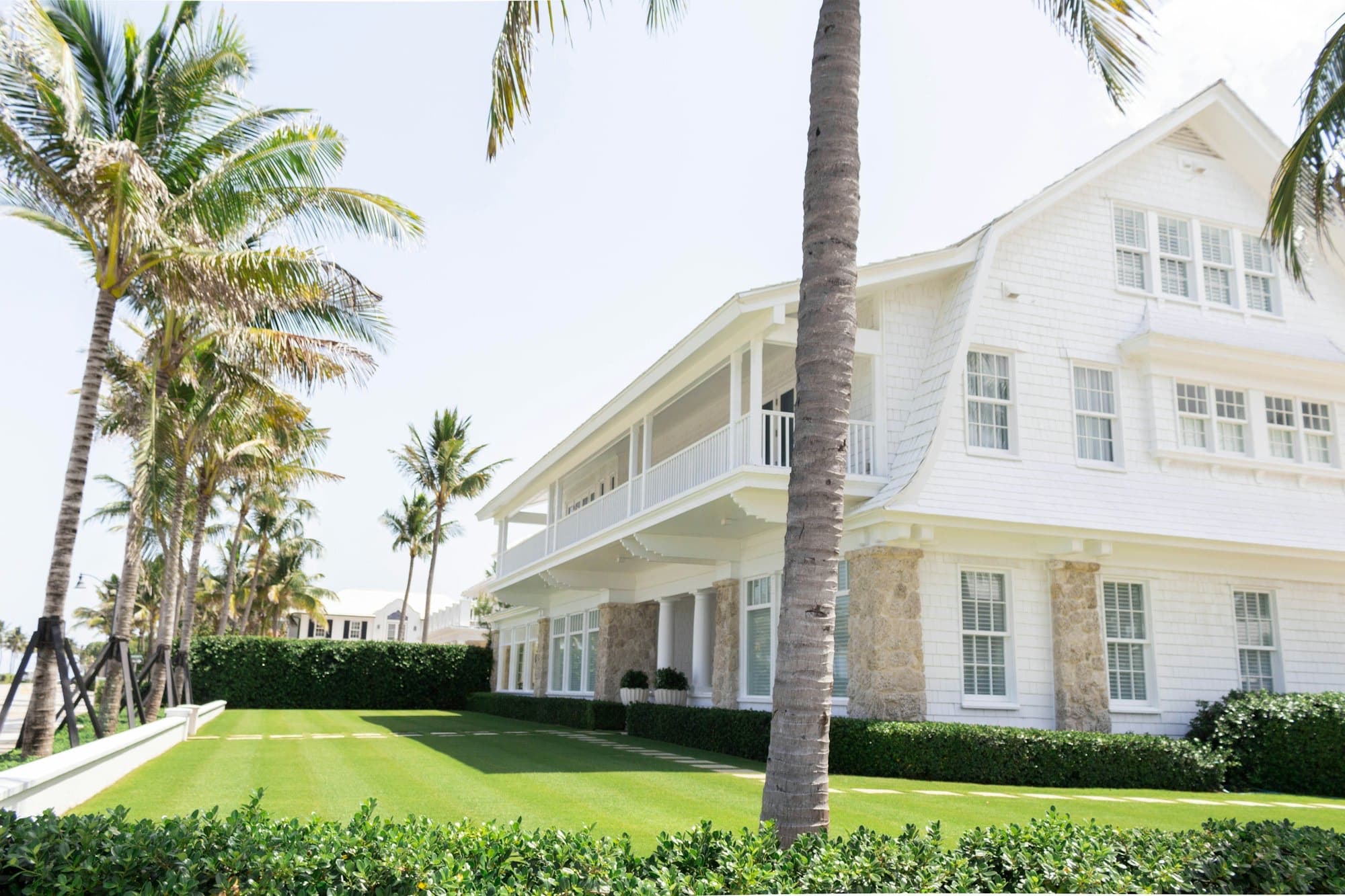
Grounds in Palm Beach County never stop growing. From late spring into fall, heat and daily rain push turf and hedges hard, and a property left alone for three weeks shows it. In the cooler, drier months growth slows, irrigation does more of the work, and bedding color comes into its own. A maintenance program has to follow those two seasons rather than repeat the same visit all year.
An estate program covers the routine work and the watching. Mowing, edging, hedge shearing, bed care and debris removal are the visible part. The less visible part is checking irrigation zones and rain shutoff devices, noticing a royal palm whose oldest fronds are browning at the tips, or a patch of St. Augustinegrass that is yellowing in a way that suggests chinch bugs. Each visit ends with notes the owner or manager can read.
In South Florida
Mowing height is set by the grass, not the mower
UF/IFAS recommends mowing standard St. Augustinegrass cultivars such as Floratam at 3.5 to 4 inches, dwarf types such as Seville closer to 2 to 2.5 inches, and coarse zoysiagrass such as Empire at about 2 to 2.5 inches. Its guidance also says to remove no more than a third of the blade at one mowing. Cutting a tall lawn short to stretch the interval stresses the turf and invites weeds.
Fertilizer timing depends on the town
Palm Beach County's own fertilizer ordinance bans fertilizing during flood, tropical storm and hurricane watches and warnings, or when 2 inches of rain or more is expected within a day. Several municipalities go further with a fixed rainy-season blackout on nitrogen and phosphorus. The Town of Palm Beach and Jupiter run theirs from June 1 to September 30, and North Palm Beach from June 1 to October 31. A program reads the rule for the property's address.
Palms tell you what they lack
UF/IFAS describes potassium deficiency as perhaps the most widespread palm nutrient deficiency, and a leading cause of royal palm death in southern Florida landscapes. Symptoms show first on the oldest leaves as tip and margin browning. Those fronds should stay on the palm until fully dead, because they are still supplying potassium. Correction takes a year or more of the right fertilizer, so early notice matters.
Watering days are assigned by address
The South Florida Water Management District's year-round rule allows landscape irrigation two days a week, with a three-day option in some counties including Palm Beach. Odd and even street addresses get different days, and no watering is allowed between 10 a.m. and 4 p.m. Local ordinances may be stricter. Controller schedules are checked against the rule that applies to the specific property.
Maintenance in Palm Beach County's estate towns
Maintenance: common questions
What does a maintenance visit usually include?
A typical visit covers mowing, edging, blowing hard surfaces, bed weeding and debris removal, with hedge shearing and pruning on the cycle set in the scope. The crew also walks irrigation zones when the program calls for it and notes anything unusual: a palm with browning lower fronds, a turf patch going yellow, a broken head. Notes go to the owner or manager after each visit.
Can the program run while we are away for the summer?
Yes. Summer is when growth is fastest and when a missed visit shows most, so the program continues on its normal schedule whether or not anyone is in residence. Owners or estate managers receive written visit notes and photos of anything that needs a decision. Access arrangements, gate codes and the preferred contact for urgent issues are set out during onboarding.
Why can't my lawn be fertilized in summer?
It depends on where the property sits. Palm Beach County's ordinance restricts fertilizing around storms and heavy rain, while several towns, including the Town of Palm Beach, Jupiter and North Palm Beach, ban nitrogen and phosphorus fertilizer through the rainy season. A partner applies fertilizer only when the local rule allows and uses products that do not contain the restricted nutrients during a blackout.
Do you remove the brown fronds from our palms?
Only the fully dead ones. UF/IFAS guidance is that partially yellow or brown lower fronds are often a sign of potassium deficiency and are still feeding the palm, so removing them speeds decline. Fronds whose tips sit above the horizontal should not be cut at all. Dead fronds, flower stalks and fruit clusters are removed on the program's palm schedule.
How is the visit frequency decided?
After a walk of the property. Grass type, the size of hedges, the amount of bedding color, irrigation layout and whether owners are in residence all affect how often a crew needs to be there. The assessment produces a written scope with a proposed frequency for each season, which the owner or manager reviews before work begins.
Property assessment
Begin with a walk-through of the grounds
- 01Tell us about the propertyTown, property type and what you'd like looked after. Two minutes.
- 02A partner walks the groundsTurf, beds, palms, irrigation and drainage, with you, your manager or staff.
- 03You receive a written programScope, visit schedule and price in writing, before any work begins.
Prefer to talk it through? (561) 319-1104