Manalapan, Florida · 33462
Estate Landscaping in Manalapan
Two pieces of land joined only by water, both held to a landscape code that asks for native plants, screened neighbors and dark beaches.
Request a Property AssessmentManalapan was chartered in 1931 by Harold Stirling Vanderbilt, and it remains small: 419 residents at the 2020 census. The town is split in two. The main section runs along A1A between the Lantana public beach and the South Lake Worth Inlet, with the ocean on one side and the lagoon on the other. The second, more secluded section takes in about the southern third of Hypoluxo Island, which it shares with Lantana.
The Town's architectural commission, known locally as Arcom, reviews landscape change by its share of on-site vegetation, and its application spells out what a landscape plan must contain. Partner crews working in Manalapan treat that document as the brief: native counts, screening between neighbors, irrigation plans and the removal of listed nuisance species. On the ocean side, lighting near the beach falls under the county's sea turtle permit program, which shapes how a garden is lit at night.
The properties
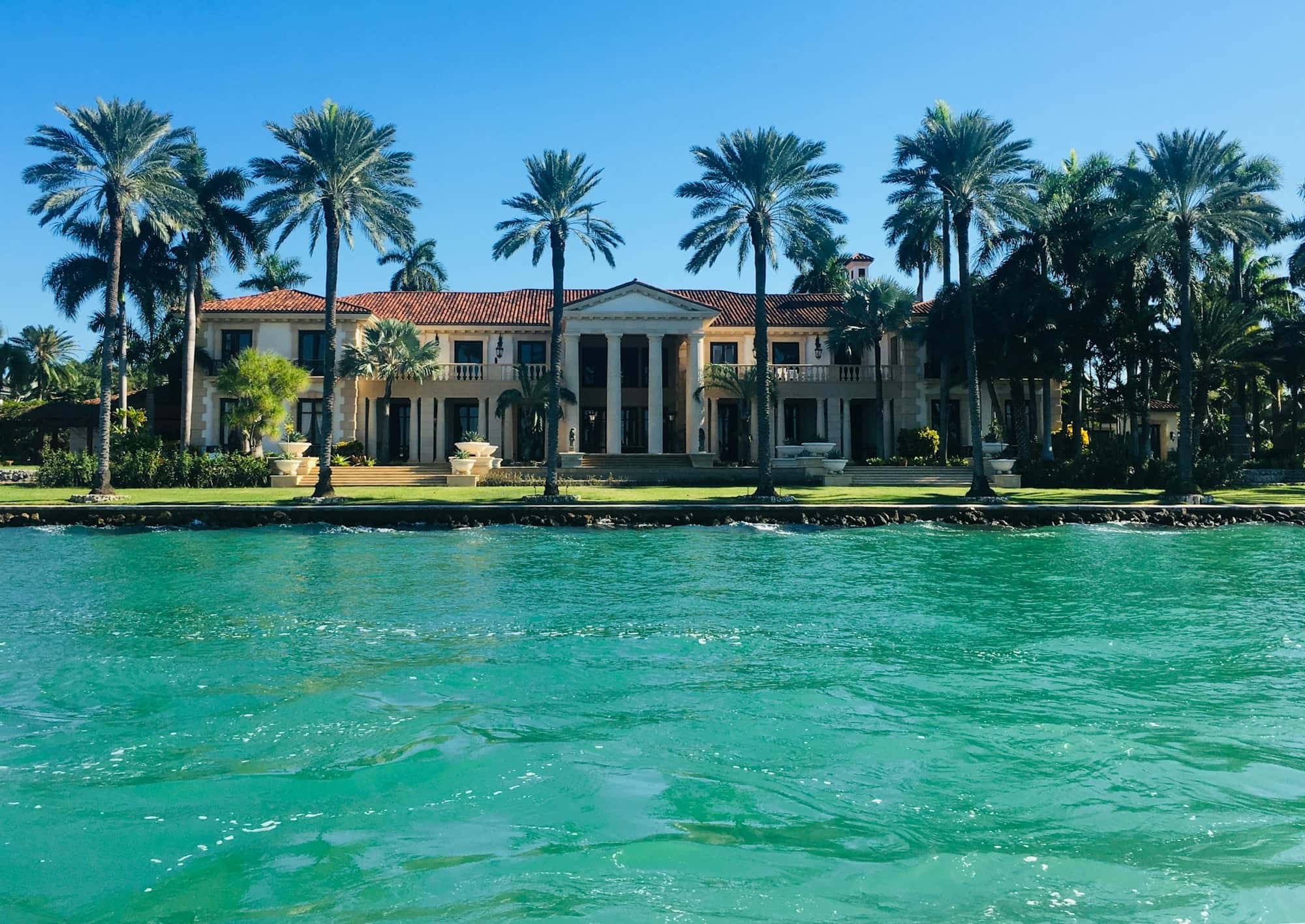
The barrier-island section is a slim strip between the Atlantic and the Lake Worth Lagoon, and some estates reach across A1A to hold both shores, with the house set between two very different exposures. Hypoluxo Island parcels face the lagoon and sit apart from beach traffic. Both are held to the Town's screening standard, which asks landscaping to provide visual privacy between neighboring homes. That makes side-yard hedges and layered plantings central to most programs here.
On the ground
What landscapes in Manalapan contend with
Two exposures on one lot
An ocean-to-lake estate carries salt spray and wind on its east face and calmer lagoon conditions on its west. UF/IFAS recommends salt-tolerant species within about an eighth of a mile of salt water, which covers the whole barrier-island section. Programs zone each property: hardy natives such as seagrape and silver buttonwood toward the ocean, a broader palette toward the lake, and irrigation tuned separately for each side.
Screening hedges that hold up
Because the Town expects landscaping to screen neighbors, hedge failure is a real problem. Manalapan's pre-approved hedge list includes podocarpus, cocoplum, Florida privet, seagrape, clusia, green island ficus and green buttonwood. Ficus whitefly remains a risk wherever ficus is used, causing leaf drop and dieback. Crews scout hedges routinely and keep replacement material consistent with the approved list.
Nuisance species on older lots
Arcom's landscape requirements call for removing Australian pines, melaleuca, Brazilian pepper and other nuisance species before construction. UF/IFAS lists Australian pine as a Category I invasive with very low wind resistance. On properties approaching renovation, crews inventory these trees early, so their removal and the native replacements can be planned together rather than discovered mid-project.
Dune vegetation on the oceanfront
Native dune plants seaward of the state Coastal Construction Control Line cannot be cut or damaged without a DEP permit, and excessive cutting counts as damage. Seagrape tolerates heavy pruning within accepted practice. Crews distinguish native dune plants from ornamental beds, which can be maintained without a CCCL permit, and follow DEP's dune plant guidelines when the work reaches the beach side.
Local rules
What Manalapan requires
Summaries for planning. The linked source is the authority; rules change.
Arcom review levels for landscape work
Manalapan sets review levels by how much on-site vegetation is affected. Landscape improvements or removal under 20 percent are Level 1, 20 to 50 percent are Level 2, and 50 percent or more are Level 3. Walls, fences and gates are Level 2. Applications include eleven sets of plans and renderings showing new planting at its proper scale against existing landscape.
SourceNative plant and irrigation requirements
New construction and new landscaping must use native material for at least 50 percent of both species and total plant count, with existing natives counted. Plans must include an irrigation plan with a water conservation method, complete screening of exterior equipment and meters, and landscaping designed to screen views to and from adjoining properties.
SourceSea turtle lighting permits
Manalapan is among the beachfront communities where Palm Beach County ERM requires a permit when a light source is replaced or installed in the Sea Turtle Protection Zone. Nesting season runs from March through October. Garden and path lighting near the ocean should be planned as low, shielded, long-wavelength fixtures before installation.
Source
Services in Manalapan
- Estate Landscape MaintenanceMaintenance for Manalapan properties
- Landscape Design & InstallationDesign for Manalapan properties
- IrrigationIrrigation for Manalapan properties
- Tree & Palm CareTrees & Palms for Manalapan properties
- Outdoor LightingLighting for Manalapan properties
- Sod, Hedges & Privacy ScreeningSod & Hedges for Manalapan properties
- Seasonal ColorSeasonal Color for Manalapan properties
- HOA & Property ManagementHOA for Manalapan properties
Landscaping in Manalapan: questions
Is Hypoluxo Island part of Manalapan?
Partly. The Town describes two separate areas connected only by water. The main section lies along A1A between the Lantana public beach and the South Lake Worth Inlet, and the more secluded section occupies about the southern third of Hypoluxo Island, which the Town shares with Lantana. Both are covered by Manalapan's code.
How much of a new landscape must be native?
For new construction and new landscaping, Manalapan's Arcom application requires at least 50 percent native plants by both species and total count. Existing natives that are retained or relocated count toward that figure, and plans must mark each plant as native or non-native.
Which hedges does the Town pre-approve?
The Town's design guideline samples list podocarpus, southern red cedar, red tip cocoplum, dwarf yaupon holly, Florida privet, seagrape, clusia, green island ficus and green buttonwood as pre-approved hedge materials. Fences are expected to remain substantially landscaped and screened, so hedge choice and fence design are usually decided together.
Do I need a permit to change lights near the beach?
In Manalapan, yes, for many fixtures. Palm Beach County ERM requires a permit when a light source is replaced or installed within the Sea Turtle Protection Zone, and nesting season runs from March through October. FWC recommends fixtures mounted low, long-wavelength amber or red sources, and full shielding, which suits most garden and pathway lighting.
Nearby estate towns
Sources for this page
- Incorporated 1931 by Harold Vanderbilt; two areas contiguous only by water; A1A section between Lantana Public Beach and South Lake Worth Inlet; southern third of Hypoluxo Island shared with Lantana: manalapan.org
- 2020 population 419; bordered by Lake Worth Lagoon west, Atlantic east, South Lake Worth Inlet south; an estate spanning A1A: en.wikipedia.org
- Arcom landscape levels by percent of vegetation; 50% native species and count; nuisance species removal incl. Australian pine; irrigation plan; screening; eleven sets of plans; renderings at scale; Point Manalapan paver agreement: manalapan.org
- Pre-approved hedge materials; fences substantially landscaped and screened: manalapan.org
- Eau Palm Beach Resort & Spa in Manalapan, FL 33462, on A1A at East Ocean Avenue: www.manalapan.org
- ERM permit required for replaced or installed lights in Sea Turtle Protection Zone in Manalapan; season March through October: discover.pbc.gov
- FWC wildlife lighting: low, long wavelength, shielded: myfwc.com
- Salt-tolerant plants within one-eighth mile of salt water: gardeningsolutions.ifas.ufl.edu
- Australian pine Category I invasive, low wind resistance: edis.ifas.ufl.edu
- DEP CCCL dune plant protection: floridadep.gov
- Ficus whitefly symptoms: blogs.ifas.ufl.edu
Property assessment
Request an assessment in Manalapan
- 01Tell us about the propertyTown, property type and what you'd like looked after. Two minutes.
- 02A partner walks the groundsTurf, beds, palms, irrigation and drainage, with you, your manager or staff.
- 03You receive a written programScope, visit schedule and price in writing, before any work begins.
Prefer to talk it through? (561) 319-1104