Service
Sod, Hedges and Privacy Screening
Turf chosen for the site's sun and use, and hedges planted and kept for privacy that lasts, including replacements for failing ficus.
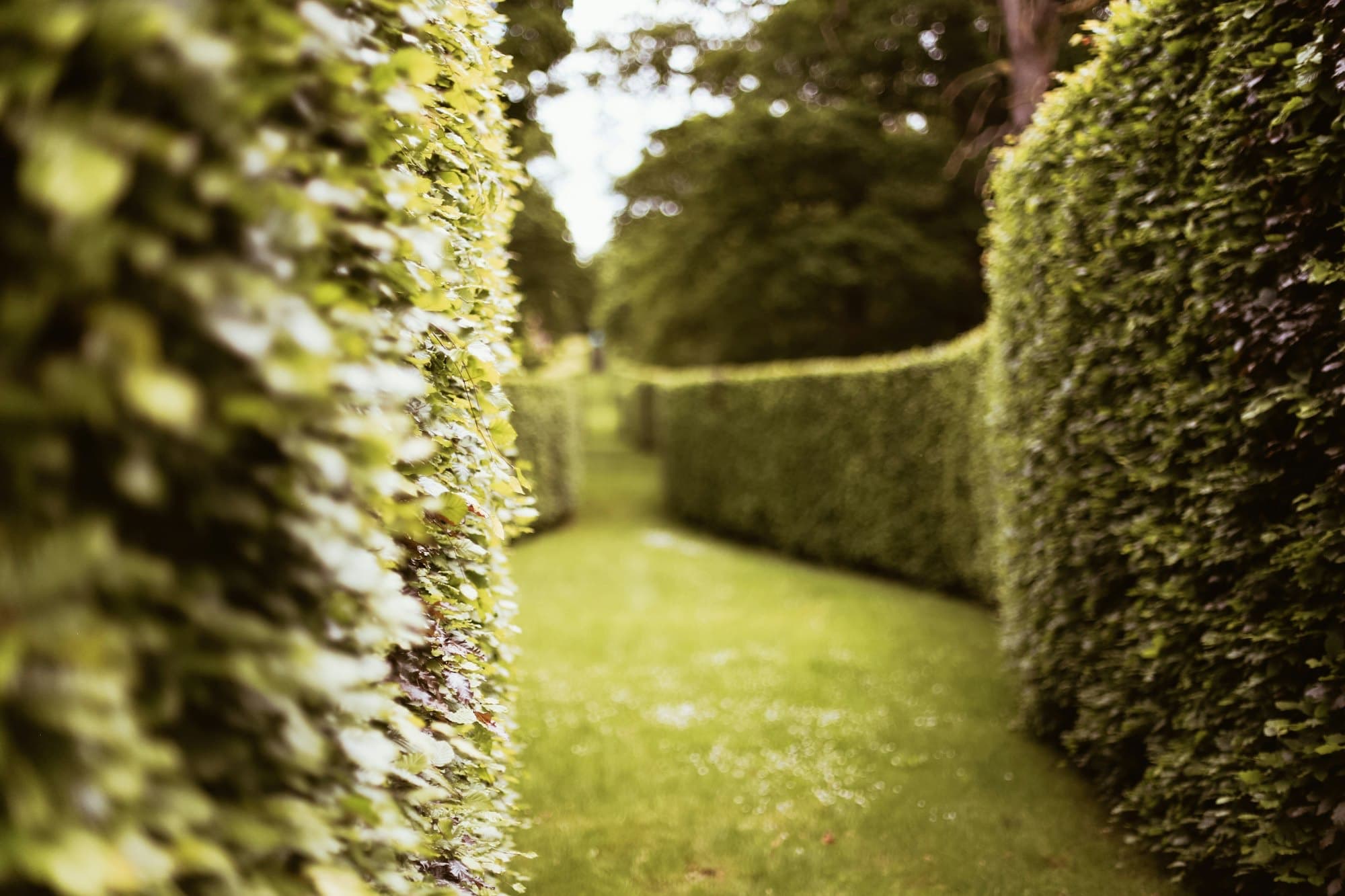
Turf and hedges frame an estate. A lawn of mixed, patchy grass or a hedge with gaps at the base reads immediately from the street. Fixing either well means understanding why it failed. Turf in heavy shade, a cultivar prone to chinch bugs in a hot, sunny spot, or irrigation that never reaches one corner will fail again if new sod simply goes down on top.
Privacy screening raises its own questions: how tall it needs to be, how quickly, how much salt it will see, and how much shearing it will need to stay in bounds. Ficus benjamina was long the default hedge because it grows fast and takes heavy pruning. Since ficus whitefly reached Florida, many of those hedges have thinned or died, and owners are choosing between treating them and replacing them.
In South Florida
St. Augustinegrass cultivars differ
UF/IFAS describes Floratam as needing full sun, mowed at 3.5 to 4 inches, with the chinch bug resistance it was released with now largely lost. Palmetto, a semi-dwarf, handles full sun or partial shade and is mowed at 3 to 4 inches. Seville is a dwarf that performs in shade and sun, is mowed at 2 to 2.5 inches and is susceptible to chinch bugs and webworms.
Zoysia: Empire and Zeon
UF/IFAS calls Empire, a coarse-textured cultivar, the most common zoysiagrass in Florida, mowed around 2 to 2.5 inches with a rotary mower. Fine-textured Zeon has good shade tolerance and performs at 0.5 to 2 inches, though UF/IFAS notes it is not as well adapted to Florida. Large patch disease is the most troubling problem in zoysia, and nitrogen in early spring and late fall raises its risk.
Ficus whitefly and the ficus hedge
Ficus whitefly arrived in Florida in 2007. UF/IFAS reports that without control it can cause severe defoliation, branch dieback and eventually plant death, and Ficus benjamina is a favored hedge because of its low cost and fast growth. Natural enemies and insecticides have been the main management tools. Owners with thinning ficus hedges weigh ongoing treatment against replacement.
Clusia as an alternative
The native pitch apple, Clusia rosea, is a common replacement for ficus. UF/IFAS rates its salt spray tolerance as high, lists it for hedges and screens and names scale as its only notable pest. It is rated for USDA zones 10B through 11, can reach 25 to 30 feet if left unpruned, and its seeds germinate readily, so it needs regular shearing and seedling removal.
Sod & Hedges in Palm Beach County's estate towns
Sod & Hedges: common questions
St. Augustine or zoysia for our lawn?
It depends on sun, use and how the lawn is mowed. St. Augustinegrass is coarse and is mowed tall, usually 3.5 to 4 inches for standard cultivars. Zoysia gives a denser, finer surface at a lower height but brings its own disease concerns, notably large patch. A partner recommends a cultivar after looking at shade, traffic, irrigation and maintenance.
Can our ficus hedge be saved?
Sometimes. Ficus whitefly can defoliate a hedge and, without control, cause dieback and death. A hedge that is leafing out again and is full at the base may respond to treatment and renovation pruning. One with large dead sections and bare lower stems is usually a candidate for replacement. An assessment looks at both options.
Is clusia a good replacement for ficus?
It often is, especially near the coast. UF/IFAS rates Clusia rosea highly tolerant of salt spray and lists it for screens. It is a large plant if left alone, it is rated only for the warmest zones, and its seeds sprout readily nearby, so it needs regular shearing and some seedling removal.
How soon can new sod be mowed and walked on?
The first mowing usually waits until the sod has rooted and resists a gentle tug, which can take a few weeks in warm weather. Foot traffic should be light until then. Establishment watering is allowed beyond normal days for up to 90 days under the water management district's rule, and the installer leaves a written schedule.
Property assessment
Begin with a walk-through of the grounds
- 01Tell us about the propertyTown, property type and what you'd like looked after. Two minutes.
- 02A partner walks the groundsTurf, beds, palms, irrigation and drainage, with you, your manager or staff.
- 03You receive a written programScope, visit schedule and price in writing, before any work begins.
Prefer to talk it through? (561) 319-1104