Palm Beach, Florida · 33480
Estate Landscaping in Palm Beach
On an island where ARCOM reviews landscaping and the work calendar changes on November 1, good grounds care starts with the Town's rules.
Request a Property AssessmentThe Town of Palm Beach occupies a barrier island about 18 miles long, in places only 500 feet wide, between the Lake Worth Lagoon and the Atlantic. Its 9,245 year-round residents grow to roughly 25,000 in season. The landscape carries a century of intent, from the Everglades Club that Addison Mizner and Paris Singer opened in 1919 to the Lake Trail along the lagoon, and the Town reviews landscape change with the same care it gives architecture.
That care shows up in specifics. The Architectural Commission reviews landscaping alongside new construction and visible alterations. Substantial landscape redesigns must meet native plant minimums. Lawn maintenance and installation each have their own permitted hours, which tighten in winter. Partner crews working in Palm Beach plan every task against those limits, so that hedge renewals, palm work and installations arrive on schedule and within the Town's rules rather than in conflict with them.
The properties
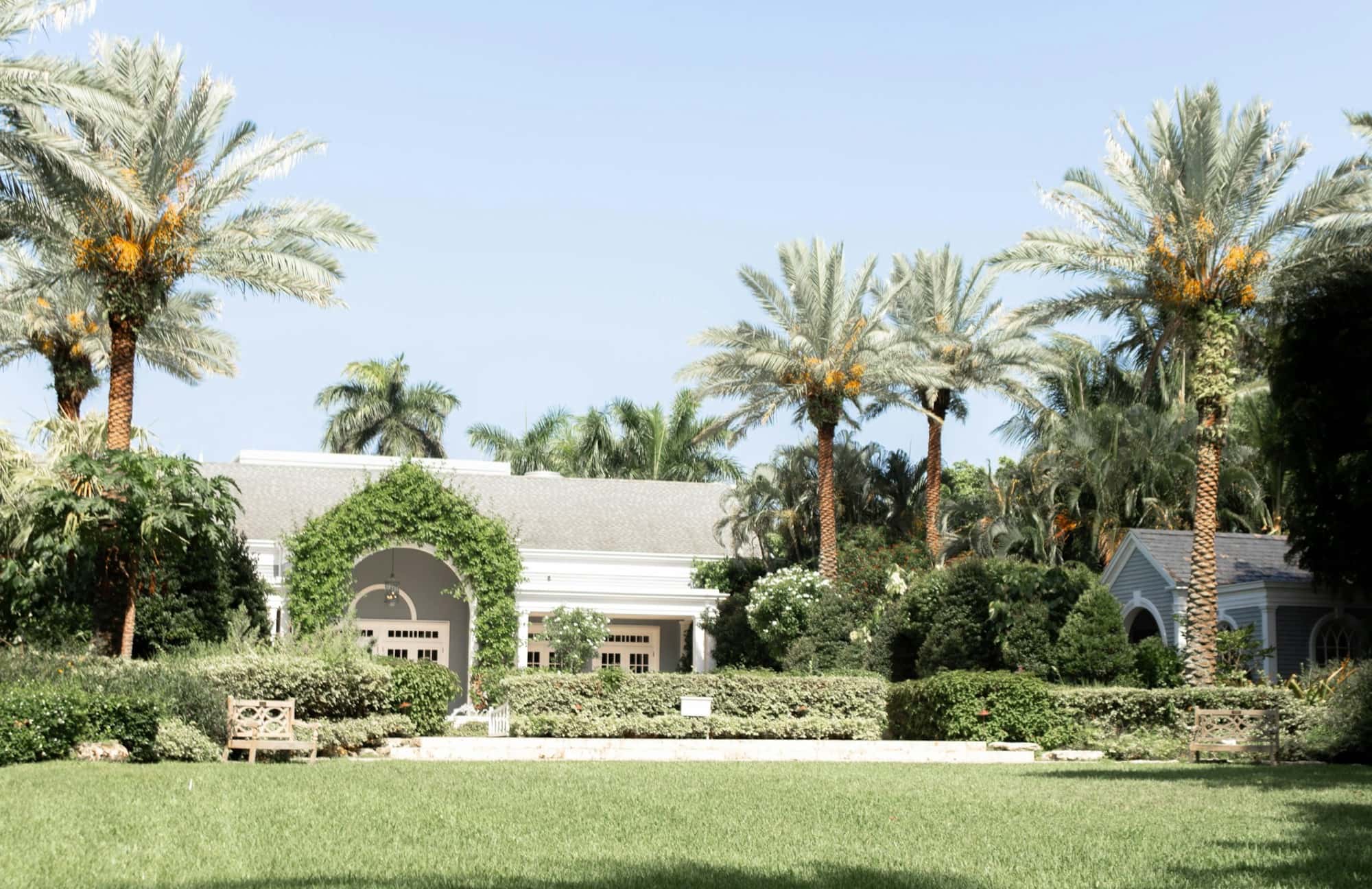
Properties range from oceanfront estates and lakefront houses to villas on narrow in-town lots near Worth Avenue and Royal Poinciana Way. Many are enclosed by tall hedges and walls, and on the smallest lots every planting bed faces a neighbor or a street. Large estates need program management across lawns, specimen trees, hedges and gardens; compact lots need precision pruning and quiet, efficient visits that fit the Town's hours. Both share salt exposure on the ocean side.
On the ground
What landscapes in Palm Beach contend with
Hedges under ficus whitefly pressure
Palm Beach privacy depends on hedges, and ficus hedges remain on many older properties. The ficus whitefly feeds on leaf undersides, causing yellowing, leaf drop and dieback in heavy infestations. Crews check by disturbing the foliage for clouds of small white adults and act early, since populations build over several generations. When a hedge is lost, replacement material and layout may need Town review depending on where the hedge sits.
Salt and wind on a narrow island
With the island only a few hundred feet wide in places, salt spray reaches well beyond the dune line. UF/IFAS recommends salt-tolerant plants within about an eighth of a mile of salt water, which describes much of the town. Programs put tolerant natives such as seagrape and silver buttonwood on the windward face and keep sensitive ornamentals sheltered behind walls and structures.
Lethal bronzing in palms
Lethal bronzing is a phytoplasma disease of palms spread by insects, not by pruning tools. Early signs include premature fruit drop and browning of the oldest leaves, followed by collapse of the spear leaf. UF/IFAS advises removing a palm promptly once it shows symptoms and tests positive. Crews on palm-heavy estates watch for those signs and arrange testing before recommending removal.
Royal palm nutrition
Royal palms frame many Palm Beach drives, and potassium deficiency is the leading cause of their death in southern Florida landscapes. Older fronds show tip and marginal necrosis first. Removing those fronds speeds decline, so crews leave them and feed on a regular schedule. Because the Town bans nitrogen and phosphorus fertilizer from June through September, the feeding calendar is built around that window.
Local rules
What Palm Beach requires
Summaries for planning. The linked source is the authority; rules change.
ARCOM and staff review of landscape changes
The Architectural Commission reviews landscaping along with new construction and visible alterations. Under the Town's project designation matrix, substantial alterations to site landscape go to ARCOM, alterations within a front yard are handled at staff level, and work on side or rear property lines falls under neighbor consent. Artificial turf in a front yard or visible from the right-of-way is also reviewed by ARCOM.
SourceNative plant minimums
When more than half of an existing landscape is modified, the project must meet minimum native plant requirements and submit a landscape and irrigation plan. The Town's landscape legend sets 30 percent native trees, 30 percent native shrubs and vines, and 30 percent native groundcover, citing Ordinance 003-2023. The plant schedule is prepared by a licensed landscape architect.
SourceSeasonal lawn maintenance and installation hours
Lawn maintenance runs weekdays 8am to 5pm from November through April, with no Saturday or Sunday work and no site noise before 9am. From May through October, weekdays run 8am to 6pm, and Saturdays allow only powered hedge and tree trimming. Landscape installation follows the stricter construction hours. The Town's chart was revised July 16, 2026.
Source
Services in Palm Beach
- Estate Landscape MaintenanceMaintenance for Palm Beach properties
- Landscape Design & InstallationDesign for Palm Beach properties
- IrrigationIrrigation for Palm Beach properties
- Tree & Palm CareTrees & Palms for Palm Beach properties
- Outdoor LightingLighting for Palm Beach properties
- Sod, Hedges & Privacy ScreeningSod & Hedges for Palm Beach properties
- Seasonal ColorSeasonal Color for Palm Beach properties
- HOA & Property ManagementHOA for Palm Beach properties
Landscaping in Palm Beach: questions
Can landscapers work on Saturdays in Palm Beach?
It depends on the season. From November 1 through April 30, the Town permits no lawn maintenance on Saturdays or Sundays. From May through October, Saturday hours are 9am to 3pm, and only tree and hedge trimming with powered equipment is permitted. Installation work follows the construction schedule, which has its own limits. The Town's posted chart is the reference.
Does replanting my garden need ARCOM approval?
Substantial alterations to site landscape go to ARCOM, while changes within the front yard are reviewed by staff and work along side or rear property lines falls under neighbor consent. If more than half of the existing landscape is modified, native plant minimums apply and a landscape and irrigation plan is required.
When can my lawn be fertilized?
Under Town Ordinance 21-2019, fertilizers containing nitrogen or phosphorus may not be applied between June 1 and September 30, and the Town asks owners to direct their landscape managers accordingly. Programs here schedule the main feedings for spring and fall and rely on products without those nutrients through summer.
What lighting rules apply to an oceanfront garden?
From March 1 through October 31, the Town requires oceanfront owners to keep artificial light from being visible on the beach, by turning off lights that shine on the beach and shielding or redirecting others. FWC recommends fixtures mounted low, long-wavelength amber or red sources, and full shielding.
Nearby estate towns
Sources for this page
- Incorporated 1911; 18-mile barrier island, 500 ft wide in places; 9,245 residents in 2020, about 25,000 in season; Everglades Club built 1918, opened January 1919; Lake Trail; Worth Avenue; Royal Poinciana Way; The Breakers: en.wikipedia.org
- ARCOM reviews modifications visible from rights-of-way, new construction and landscaping: www.townofpalmbeach.com
- Project designation matrix: substantial site landscape alterations to ARCOM; front-yard alterations staff; side/rear property line neighbor consent; artificial turf in front yard ARCOM: www.townofpalmbeach.com
- Native minimums 30% trees, shrubs/vines, groundcover; >50% modification triggers native requirement and landscape/irrigation plan; Ord. 003-2023: www.townofpalmbeach.com
- Lawn maintenance and construction hours by season; Dec 24-Jan 1 construction prohibition; rev. 07/16/2026; Palm Beach FL 33480: www.townofpalmbeach.com
- Ordinance 21-2019 bans nitrogen and phosphorus fertilizer June 1-September 30: public.alertsense.com
- Oceanfront lights must not be visible from beach March 1-October 31; turn off, shield or redirect: page.alertsense.com
- FWC wildlife lighting: low, long wavelength, shielded: myfwc.com
- Ficus whitefly symptoms and early detection: blogs.ifas.ufl.edu
- Salt-tolerant plants within one-eighth mile of salt water: gardeningsolutions.ifas.ufl.edu
- Lethal bronzing: phytoplasma, not spread by tools, symptoms, remove after positive test: edis.ifas.ufl.edu
- Potassium deficiency leading cause of royal palm death; do not remove older fronds: edis.ifas.ufl.edu
Property assessment
Request an assessment in Palm Beach
- 01Tell us about the propertyTown, property type and what you'd like looked after. Two minutes.
- 02A partner walks the groundsTurf, beds, palms, irrigation and drainage, with you, your manager or staff.
- 03You receive a written programScope, visit schedule and price in writing, before any work begins.
Prefer to talk it through? (561) 319-1104