Service
Landscape and Outdoor Lighting
Lighting that shows the garden at night without lighting the sky or the beach, with turtle-safe fixtures for oceanfront properties.
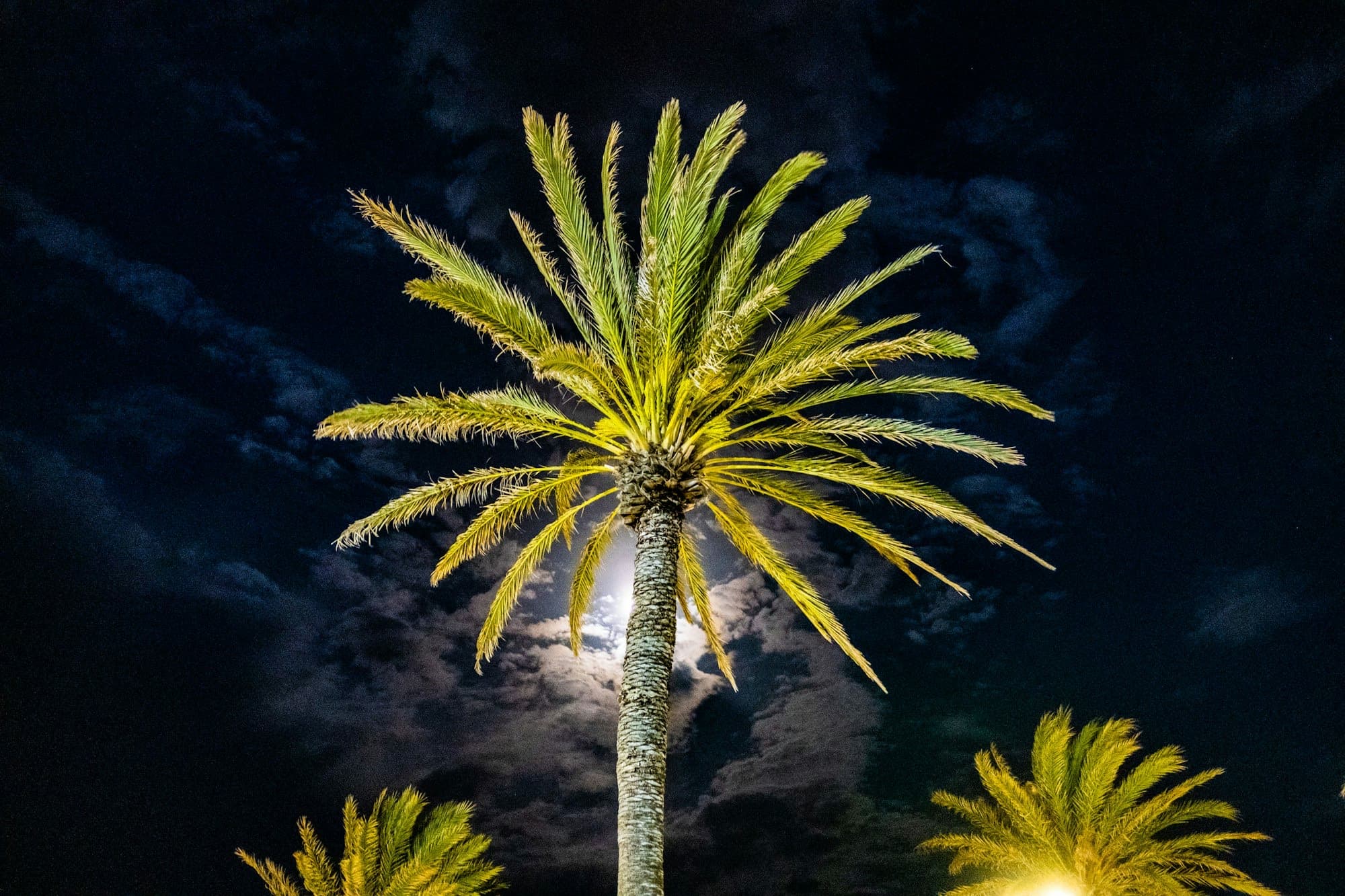
Good landscape lighting is mostly restraint. A few well-placed fixtures on a royal palm, a sculptural tree or a garden wall, low path lights that put light on the ground where people walk, and nothing aimed into bedroom windows or the neighbor's terrace. The design is drawn alongside the planting plan so fixtures sit where plants will be at maturity, not where they are on installation day.
Oceanfront properties carry an added responsibility. Sea turtles nest on Palm Beach County beaches from March through October, and lights visible from the beach can disorient nesting females and hatchlings. Fixtures on these lots are chosen to meet wildlife lighting criteria: mounted low, using long-wavelength amber or red light, and fully shielded so the lamp cannot be seen from the sand.
In South Florida
Sea turtle nesting season
Palm Beach County's Environmental Resources Management department describes nesting on county beaches as running from March through October, and local municipalities give the window as March 1 to October 31. Artificial light visible from the beach can disorient turtles. The county has regulated beachfront lighting since 1987 under Article 14.A of its Unified Land Development Code.
Low, long and shielded
The Florida Fish and Wildlife Conservation Commission's wildlife lighting criteria have three parts. Keep it low: mount fixtures as low as possible with the least output needed. Keep it long: use long-wavelength light above 560 nanometers, such as amber, orange or red LEDs. Keep it shielded: full cutoff, with no light above a 90-degree plane and no visible lamp or glowing lens.
Permits in the Sea Turtle Protection Zone
The county requires a permit from Environmental Resources Management when any light source is replaced or installed within the Sea Turtle Protection Zone in listed beachfront communities, including Jupiter, Jupiter Inlet Colony, Tequesta, North Palm Beach, Singer Island, Palm Beach Shores, Lake Worth, Lantana, Manalapan, Briny Breezes and Boynton Beach. Other towns run their own rules. A project checks which applies first.
Lighting in Palm Beach County's estate towns
Lighting: common questions
We are on the ocean. Can we have landscape lighting at all?
Yes, with the right fixtures and placement. FWC's criteria call for fixtures mounted low, long-wavelength amber, orange or red light above 560 nanometers, and full cutoff shielding so the lamp cannot be seen from the beach. In the county's Sea Turtle Protection Zone, replacing or installing a light source requires a permit from Environmental Resources Management.
Why not use amber filters over white bulbs?
FWC's criteria specifically call for amber, orange or red LEDs without filters, gels or lenses. Filtered white sources, PC amber LEDs and color-changing fixtures do not meet the long-wavelength criterion. Fixtures for beach-visible areas are chosen from products that meet the criteria as built.
How do you avoid glare into the house?
By aiming and shielding each fixture, choosing beam spreads that fit the plant, and placing path lights to wash the ground rather than the eye. Lighting is tested at night before handover, from inside the house and from neighboring sight lines, and adjusted on site.
Does landscape lighting need maintenance?
Yes. Palms and trees grow, so uplights need re-aiming. Mulch and plants bury path lights. Storms knock fixtures out of line, and connections corrode in salt air. An annual check, plus a look after any significant storm, keeps the system working as designed.
Property assessment
Begin with a walk-through of the grounds
- 01Tell us about the propertyTown, property type and what you'd like looked after. Two minutes.
- 02A partner walks the groundsTurf, beds, palms, irrigation and drainage, with you, your manager or staff.
- 03You receive a written programScope, visit schedule and price in writing, before any work begins.
Prefer to talk it through? (561) 319-1104