Wellington, Florida · 33414, 33449
Equestrian Estate Landscaping in Wellington
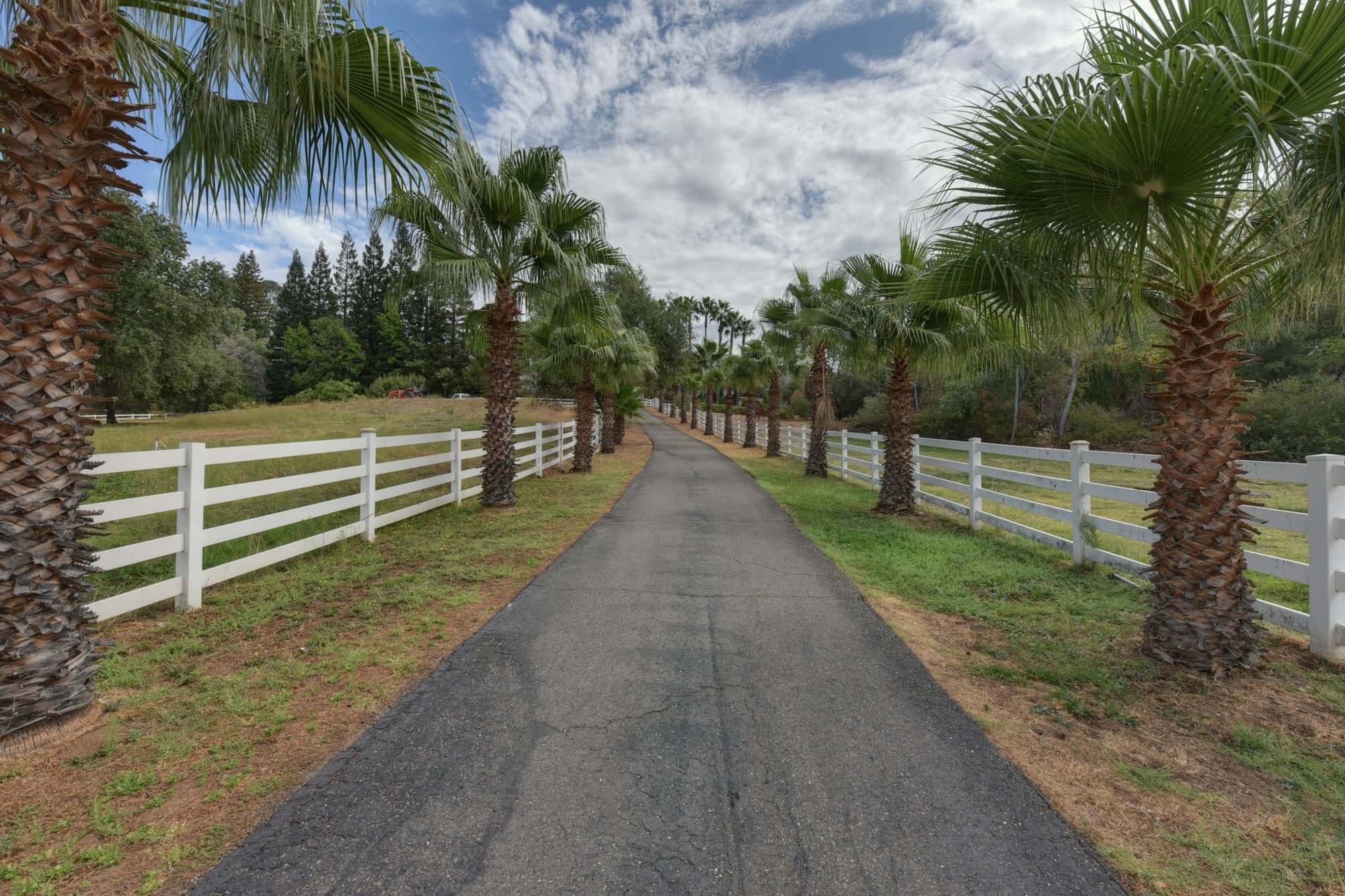
Barns, rings and road hedges in the Equestrian Preserve, kept to village standards and timed around a show calendar that fills the winter.
Request a Property AssessmentWellington's Equestrian Preserve Area covers about 9,000 acres in the western and southern parts of the village, and it is governed by the Equestrian Overlay Zoning District adopted in 2003. Development standards there exist to protect an equestrian way of life, and an appointed Equestrian Preserve Committee advises the village on land use in the preserve. For a landscape program, that means grounds that work for horses first: clear sightlines on bridle paths, nothing toxic near stalls or turnout, and hedges that meet the village code along every road.
The working calendar is set by the showgrounds. Wellington International lists competition from November through April, and the 2027 Winter Equestrian Festival is scheduled for January 6 to April 4. Polo runs nearby at the National Polo Center, formerly the International Polo Club Palm Beach. Owners who arrive for the season expect a farm that looks settled on day one, so partner crews working in Wellington plan installs, sod and heavy pruning for the months before the first horses ship in.
The properties
Inside the Equestrian Preserve, a property may combine a residence with a barn, a riding ring, paddocks and manure storage, sometimes within a gated equestrian community such as Grand Prix Village or Palm Beach Point. Outside the preserve, the same village landscape regulations apply to every residential lot. Farm grounds divide into zones with very different needs: ornamental beds near the house, utility edges around barns and manure bins, and turf or pasture where horses graze. Each zone gets its own plant list and schedule.
On the ground
What landscapes in Wellington contend with
Toxic ornamentals near barns and turnout
UF/IFAS publishes a list of common toxic plants for Florida horse owners, and several are standard landscape shrubs; azalea is the first entry. Horses usually avoid weeds when pasture or hay is ample, but problems start with overgrazing or with clippings tossed over a fence. A farm program keeps a plant list for anything within reach of stalls, paddocks and wash racks, and never dumps prunings where horses can get to them.
Choosing hedge material
The village requires hedges along roads and on fence lines facing a road, and its approved list includes cocoplum, podocarpus, green arboricola, Simpson stopper, clusia and trinette. Ficus is not on that list, which matters: UF/IFAS documents ficus whitefly causing severe defoliation, branch dieback and sometimes plant death in Ficus benjamina hedges. Replacing a declining ficus hedge with approved material solves the pest and the code question together.
Chinch bugs in house lawns
St. Augustinegrass around the main house is vulnerable to southern chinch bugs, which UF/IFAS notes cause circular discolored patches that usually show first in water-stressed areas, with infestations peaking in early July. UF/IFAS research also found heavy nitrogen feeding increased egg production. A program scouts the hottest, driest edges along driveways and rings, keeps irrigation even, and holds nitrogen to UF/IFAS rates rather than pushing color.
Show season falls in the dry months
The peak competition months coincide with the dry season, when lawns and new plantings most need water, yet the South Florida Water Management District's year-round rule still limits irrigation days and bars watering between 10 a.m. and 4 p.m. Micro-irrigation and hand-watering with a shut-off nozzle are excluded, so farms that install drip in beds and planters can keep ornamentals fresh for the season without breaking the schedule.
Local rules
What Wellington requires
Summaries for planning. The linked source is the authority; rules change.
Tree and vegetation removal permit
Wellington requires a Tree/Vegetation Removal permit before trees are removed, including fruit trees, and the application asks for a replacement plan listing species, size, location and quantity. Trimming is limited to 25 percent of a tree or palm; over-trimming can lead to required removal and replacement and fines. Trees to be removed are tagged on site and shown on a survey or drawing.
SourceRoad hedges and the December 31, 2026 deadline
Village landscape regulations call for hedges along all roads and along any fence portion facing a road, except at gates, at least 36 inches tall and 24 inches on center for general screening. Properties whose side or rear lines abut a major thoroughfare, such as Forest Hill Boulevard, should have an approved hedge row by December 31, 2026. Falling short can lead to fines and liens.
SourceEquestrian Preserve and manure storage
Development in the Equestrian Preserve Area is governed by the Equestrian Overlay Zoning District in the village Land Development Regulations. On equestrian properties, livestock waste must be kept in covered, contained bins that stop stormwater from carrying it into nearby water bodies, sized to the number of horses. Planting plans should leave clear, dry access to bins for hauling.
Source
Services in Wellington
- Estate Landscape MaintenanceMaintenance for Wellington properties
- Landscape Design & InstallationDesign for Wellington properties
- IrrigationIrrigation for Wellington properties
- Tree & Palm CareTrees & Palms for Wellington properties
- Outdoor LightingLighting for Wellington properties
- Sod, Hedges & Privacy ScreeningSod & Hedges for Wellington properties
- Seasonal ColorSeasonal Color for Wellington properties
- HOA & Property ManagementHOA for Wellington properties
Landscaping in Wellington: questions
Do we need a permit to remove trees on our farm?
In Wellington, yes. The village requires a Tree/Vegetation Removal permit before trees come out, fruit trees included, with a replacement plan. The fee is waived for trees that are dead, diseased or invasive, but the permit is still needed. Trimming beyond 25 percent of a tree or palm counts as over-trimming and can lead to replacement requirements and fines.
Our property backs onto Forest Hill Boulevard. What do we need to do?
The village landscape regulations say properties whose side or rear lines abut a major thoroughfare, with Forest Hill Boulevard and Birkdale Drive named as examples, should have a hedge row of approved material by December 31, 2026. Those roads carry their own height and material rules, so a partner should confirm the specification with the village before planting.
Which hedge plants does the village approve?
Wellington's published list for screening hedges includes cocoplum, podocarpus, green arboricola, Simpson stopper, clusia and trinette, planted at least 36 inches tall and 24 inches on center. Where a farm sits next to turnout, the choice should also be checked against UF/IFAS guidance on plants toxic to horses before anything goes in the ground.
Can work be scheduled around our arrival for the season?
Yes. When you submit a request, note your arrival date and any horse arrivals. The partner who receives it plans installs and heavy pruning for the weeks before, and keeps in-season visits to routine maintenance at times that suit the barn. Partners are vetted for licensing and insurance before they receive requests.
Nearby estate towns
Sources for this page
- Equestrian Preserve Area ~9,000 acres in western and southern Wellington; EOZD adopted 2003; manure stored in covered, contained bins sized to number of horses: www.wellingtonfl.gov
- Equestrian Preserve Committee advises PZAB and Council on land use in the Equestrian Preserve: www.wellingtonfl.gov
- Hedges along roads and road-facing fences; 36 in min, 24 in on center; approved species list; Dec 31, 2026 thoroughfare hedge deadline; 25% trimming limit; removal permit; fruit trees; fines and liens: www.wellingtonfl.gov
- Tree/Vegetation Removal Application: tagging, survey, replacement plan, fee waived for dead/diseased/invasive: www.wellingtonfl.gov
- Winter Equestrian Festival 2027: January 6 - April 4, 2027, Wellington International, 3400 Equestrian Club Drive, Wellington 33414: www.thepalmbeaches.com
- Wellington International competitions November through April: www.wellingtoninternational.com
- International Polo Club Palm Beach sold to USPA in 2022 and renamed National Polo Center: dressage-news.com
- Grand Prix Village and Palm Beach Point are gated equestrian communities in Wellington's Equestrian Preserve: www.echofineproperties.com
- Common toxic plants for Florida horse owners; azalea; horses avoid weeds with ample forage: edis.ifas.ufl.edu
- Ficus whitefly causes severe defoliation, dieback, possible death in Ficus benjamina hedges: edis.ifas.ufl.edu
- Southern chinch bug: circular patches, water-stressed areas first, peak early July: edis.ifas.ufl.edu
- Heavy nitrogen increased chinch bug egg production (UF/IFAS research): blogs.ifas.ufl.edu
- SFWMD year-round irrigation rule: no watering 10 a.m.-4 p.m.; low-volume methods excluded: www.sfwmd.gov
- ZIP 33414 is Wellington: zip-codes.com
- ZIP 33449 associated with Wellington: statisticalatlas.com
- South Florida dry season runs November through May; wet season roughly late May to mid-October: sfwmd.gov
Property assessment
Request an assessment in Wellington
- 01Tell us about the propertyTown, property type and what you'd like looked after. Two minutes.
- 02A partner walks the groundsTurf, beds, palms, irrigation and drainage, with you, your manager or staff.
- 03You receive a written programScope, visit schedule and price in writing, before any work begins.
Prefer to talk it through? (561) 319-1104