Service
Tree and Palm Care
Palms and canopy trees pruned, fed and watched to UF/IFAS guidance, with no hurricane cuts and early notice of the diseases that kill palms here.
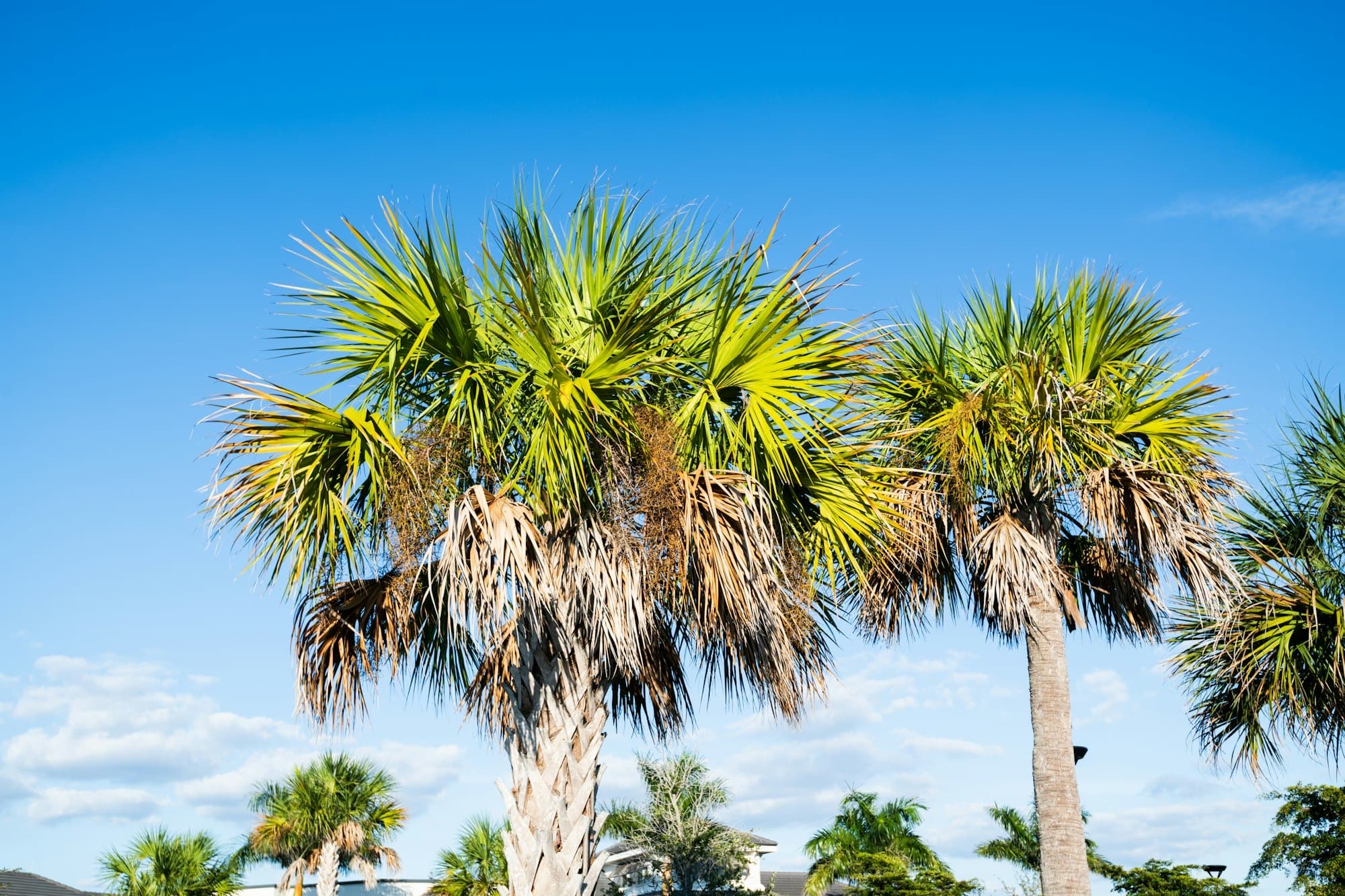
A mature royal palm, coconut or canopy oak can take decades to reach the size that defines a property. Most of the damage to these plants is avoidable: overpruning that leaves a palm with a thin tuft of young fronds, turf fertilizer that throws palm nutrition out of balance, climbing spikes that wound trunks, or a disease noticed only after it is too late to protect the palms nearby.
Tree and palm care starts with an inventory: species, size, condition and anything that needs attention. Pruning follows the ANSI A300 tree care standard and UF/IFAS guidance, which for palms means removing only dead fronds, flower and fruit stalks. Nutrition is planned around the palms' needs, not the lawn's. Each visit looks for the early signs of the lethal diseases present in Florida, so a problem can be confirmed and acted on quickly.
In South Florida
No hurricane cuts
UF/IFAS reports that palms given a hurricane cut, with most leaves removed and only a tuft of young ones left, were more likely to have their crowns snapped off in the 2004 and 2005 storms than palms with fuller crowns. Its guidance is that no leaves with tips above the horizontal, the 9 and 3 o'clock positions, should be removed, and that climbing spikes should never be used to prune palms.
Lethal bronzing and lethal yellowing
Both are phytoplasma diseases spread by a planthopper. UF/IFAS lists lethal bronzing hosts including cabbage palm (sabal), Canary Island, edible and wild date palms, and queen palm, and notes infected palms can die within months of symptoms. Lethal yellowing affects coconut and many other palms. Symptomatic palms are removed, and nearby palms may be protected with antibiotic injections every few months.
Ganoderma butt rot has no cure
Ganoderma is a soil-borne fungus that rots the lower trunk of palms. UF/IFAS says there are no cultural or chemical controls to prevent or cure it, that all palms are assumed susceptible, and that a palm should be removed as soon as conks appear on the trunk, with as much of the stump and roots as possible. Replanting a palm in the same spot is not recommended.
Royal palms and potassium
UF/IFAS calls potassium deficiency perhaps the most widespread palm nutrient problem and a leading cause of royal palm death in southern Florida landscapes. Royal palms show it as browning at the tips and margins of the oldest leaves. High nitrogen relative to potassium in the soil can bring it on. Correction with a palm maintenance fertilizer every three months can take one to two years or longer.
Trees & Palms in Palm Beach County's estate towns
Trees & Palms: common questions
Should palms be cut back before a hurricane?
No. UF/IFAS observed that hurricane-cut palms were more likely to lose their crowns in the 2004 and 2005 storms than fuller palms, and its South Florida calendar repeats the advice not to hurricane or pineapple prune palms. Before storm season, remove dead fronds, coconuts and seed pods that could become projectiles, and leave green fronds in place.
One of our palms is turning brown from the bottom up. What should we do?
Have it looked at promptly. Browning of the oldest leaves can be potassium deficiency, which is common and treatable over time. It can also be an early symptom of lethal bronzing in palms such as sabal and date palms, which kills quickly and calls for testing and removal. A partner can assess the palm and recommend testing if the symptoms point to disease.
We see a shelf-like growth at the base of a palm. Is that serious?
It may be a Ganoderma conk, and if so, yes. UF/IFAS says there is no cure, that the palm should be removed as soon as conks appear, and that as much of the stump and root system as possible should come out with it. The fungus stays in the soil, so a new palm should not go back in the same spot.
Why does palm fertilizer differ from lawn fertilizer?
Palms need potassium and magnesium in balance with nitrogen. UF/IFAS notes that a high nitrogen to potassium ratio in the soil can induce or worsen potassium deficiency, which is a common cause of decline in royal palms. A palm program uses a palm maintenance fertilizer on its own schedule, applied only when local fertilizer rules allow.
Property assessment
Begin with a walk-through of the grounds
- 01Tell us about the propertyTown, property type and what you'd like looked after. Two minutes.
- 02A partner walks the groundsTurf, beds, palms, irrigation and drainage, with you, your manager or staff.
- 03You receive a written programScope, visit schedule and price in writing, before any work begins.
Prefer to talk it through? (561) 319-1104