Service
Seasonal Color
Beds and containers rotated to the South Florida calendar: cool-season flowers for the winter months, heat-tolerant color through summer.
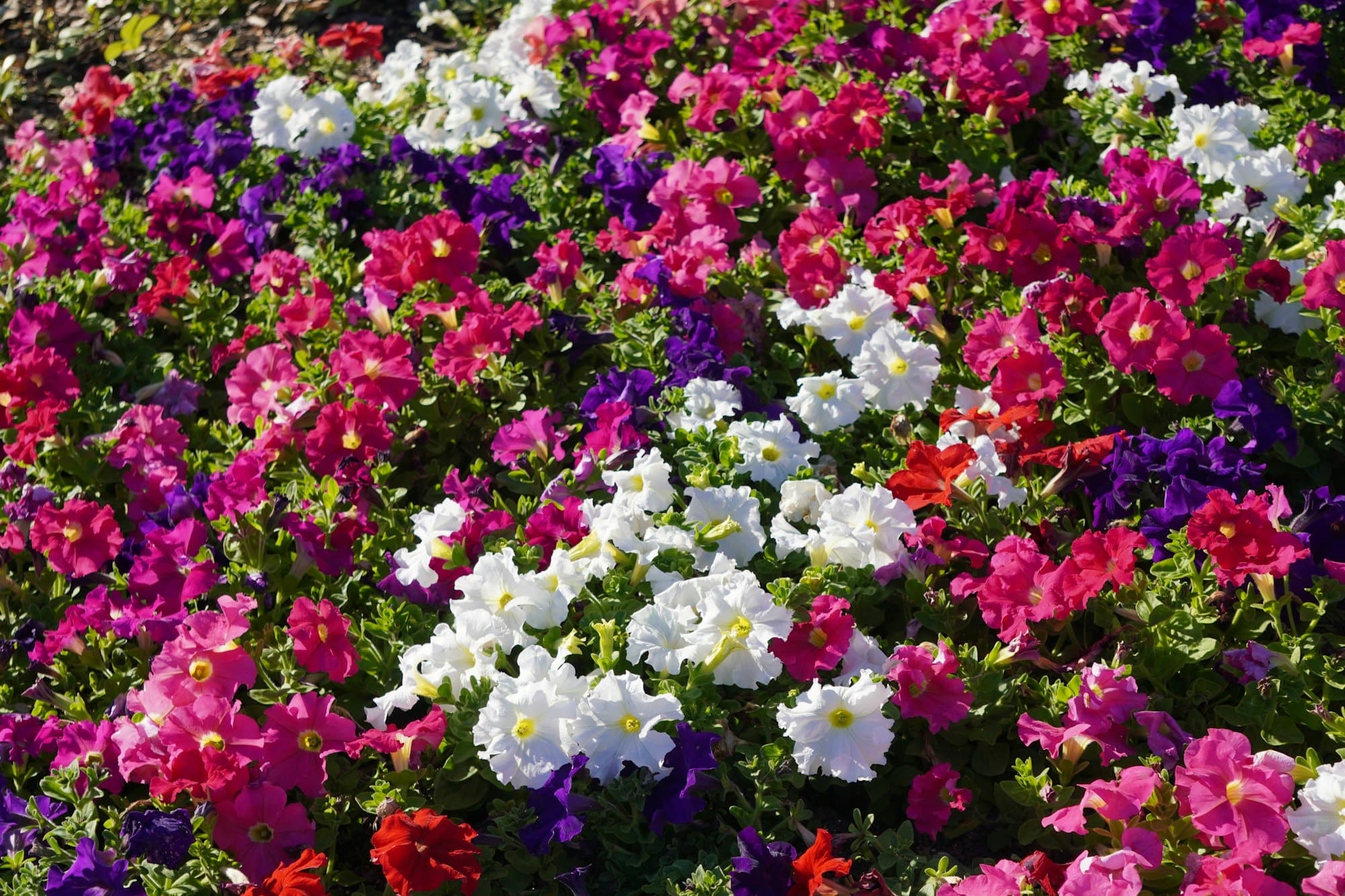
Seasonal color does more than any other planting to signal that a property is cared for, and it is the part of the landscape most tied to the calendar. In South Florida, the main color season is the cool, dry stretch from fall into spring, when many owners are in residence and annuals that would wilt in July thrive in full sun.
A color program plans each rotation ahead: the palette, plant counts, bed preparation and timing. When cool-season plants decline as heat and rain arrive in late spring, beds move to summer-tolerant material or to a simpler planting that holds until fall. Between changeovers, beds are deadheaded, fed where rules allow, watched for disease and watered by hand or drip where needed.
In South Florida
Winter is flower season
UF/IFAS describes cool-season annuals as intolerant of heat, rain and humidity, planted in fall and usually declining with the onset of summer in late May or June. It also notes that impatiens, treated as a shade plant for summer farther north, thrive in full sun as a winter annual in south Florida. The UF/IFAS South Florida calendar lists impatiens, alyssum and dianthus for October.
What holds up in summer
The UF/IFAS South Florida Gardening Calendar lists vinca, coleus, pentas, gaillardia, blue daze, salvias and ornamental pepper for July, and vinca, coleus, pentas, salvia and celosia for August. Periwinkle wants full sun and dry-side watering; UF/IFAS warns its roots rot if irrigated too often and points to the Cora and Nirvana series for better disease resistance.
Watering rules and color beds
Annual beds often need water on days turf does not. The South Florida Water Management District's rule allows micro-irrigation, container watering and hand watering with an automatic shut-off nozzle at any time, and allows extra watering for new plantings for up to 90 days. Putting color beds on drip, separate from turf zones, makes this practical.
Seasonal Color in Palm Beach County's estate towns
Seasonal Color: common questions
When should winter color go in?
From October, once the worst heat has passed. The UF/IFAS South Florida calendar lists impatiens, alyssum and dianthus for October, and petunias, verbena and salvia for November. Planting too early in a hot fall can shorten the display, so timing depends on the weather in a given year.
Why did our impatiens fail?
There are several possible reasons, including summer heat, overwatering and disease. Impatiens in south Florida are a cool-season plant grown in full sun through winter, and they decline as heat and rain arrive. A partner looks at timing, watering and plant health before choosing the next rotation.
What can we plant for color while we are away in summer?
Plants that tolerate heat and rain and need little attention. The UF/IFAS South Florida calendar lists vinca, pentas, coleus, salvia, celosia and blue daze among summer options. Periwinkle prefers to be kept on the dry side, so it should not share an irrigation zone with turf.
Can annual beds be watered on non-watering days?
Yes, if they are on micro-irrigation or watered by hand with a shut-off nozzle. The water management district's rule allows those methods at any time, and new plantings get extra watering days for up to 90 days. That is one reason color beds are often put on their own drip zone.
Property assessment
Begin with a walk-through of the grounds
- 01Tell us about the propertyTown, property type and what you'd like looked after. Two minutes.
- 02A partner walks the groundsTurf, beds, palms, irrigation and drainage, with you, your manager or staff.
- 03You receive a written programScope, visit schedule and price in writing, before any work begins.
Prefer to talk it through? (561) 319-1104